Monday, 4 July 2016

Monday, 27 June 2016

Term 2 Week 9 2016

Homework
  • Ex 3C, Lens, p. 56-63

Lens Ray Diagrams

Convex Lens - Converging Lens


Concave Lens - Diverging Lens

Convex - Concave Lens (general)

Convex - Concave Lens (detail)


Ray Diagram


Monday, 20 June 2016

Term 2 Week 8 2016

Homework
  • Ex 5A History of Atomic Models This should be complete by now
  • Ex 5B Radioactive Decay and Half Life - This should be complete by now
  • Ex 5C Nuclear Reactions and Nuclear Energy Calculations - due this week


You will be assessed in Phy 3.5 Atomic & Nuclear Physics AS 91172 this week Thursday 23rd June 2016

The pre-aligned Standard Covering: 
  1. Historical models of the Atom; 
  2. Half-Life; 
  3. but not Nuclear Reactions 
can be found in the links below:

90256 Demonstrate understanding of atoms and radioactivity 2007 - Questions - Answers
90256 Demonstrate understanding of atoms and radioactivity 2008 - Questions - Answers
90256 Demonstrate understanding of atoms and radioactivity 2009 - Questions - Answers
90256 Demonstrate understanding of atoms and radioactivity 2010 - Questions - Answers
90256 Demonstrate understanding of atoms and radioactivity 2011 - Questions - Answers

Naturally Occurring Nuclear Fission Reactor


Term 2 Week 7 2016

Homework
  • Ex 5A History of Atomic Models This should be complete by now
  • Ex 5B Radioactive Decay and Half Life - This should be complete by now
  • Ex 5C Nuclear Reactions and Nuclear Energy Calculations - due next week

Field Trip to Canterbury University for Rutherford's Den and Radioactivity Lab, this Thursday & Friday 16th -17th June 2016

You will be assessed in Phy 3.5 Atomic & Nuclear Physics AS91172 next week Thursday 23rd June 2016

Thursday, 9 June 2016

Term 2 Week 6 2016

Homework,

  • Ex 5B Radioactive Decay and Half Life - This should be complete by now
  • Ex 5C Nuclear Reactions and Nuclear Energy Calculations - due next week
Nuclear Fusion in the Sun

Binding Energy comes from the change in mass from individual nucleons to being combined into a nucleus. This is energy lost by the nucleons joined together in a nucleus and must be returned in order to separate the nucleons
E = Δmc2

Mass Energy Equivalence

Nuclear Reactions

Fission Fusion and Radioactive Decay

Fission & Fusion


Tuesday, 31 May 2016

Term 2 Week 5 2016

Homework

  • Ex 5A, P. 151-155, Models of the Atom


Parts of the Atom


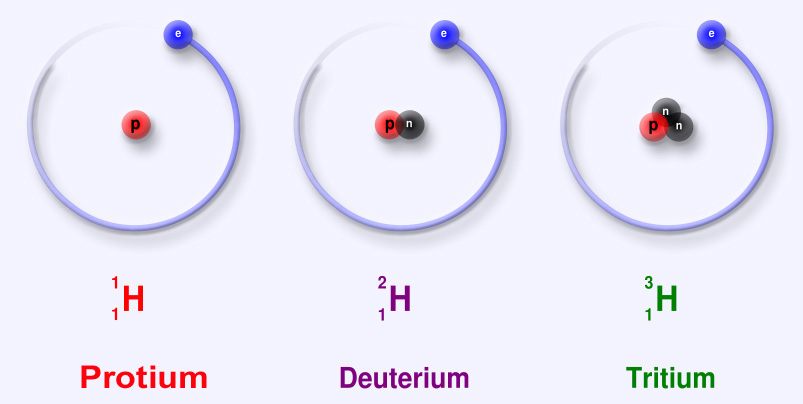
Isotopes
Isotopes are versions of an atom or an element that have the same number of protons, but different numbers of neutrons


Radioactive Decay
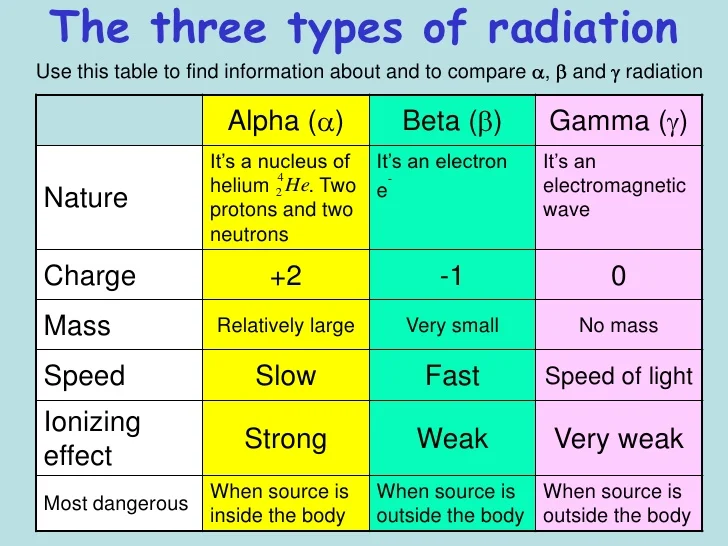
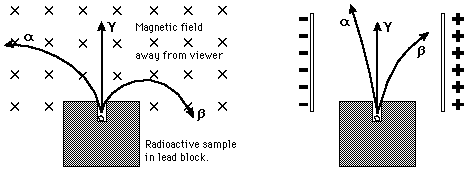
Alpha, Beta & Gamma Radiation


  • Alpha particles are emitted by a larger nucleus that has too many Protons
  • Beta particles are emitted by a nucleus that has too many Neutrons
  • Gamma photons are emitted by a nucleus that has too much Energy (is in an exited state)


Alpha Decay

Beta Decay


Radiation

Types of Radiation

Half-Life

Half-Life Explanation


Half-Life Calculations


Half-Life Formula


A = Ao(½)n


A: Amount of radioactive substance now present
Ao: Amount of radioactive substance originally present

n: Number of Half-Lives that have past

If you can understand the maths for using the formula above, you will be able to pinpoint your answers instead of estimating them using a graph.
You will need to be able to use the 3rd Log Law to solve for half lives.