Sunday, 28 February 2016

Term 1 Week 5

Homework:

  • Force, Ex 4B, p.97-104
  • Circular Motion, Ex 4H, p.132-134 - from last week

Isaac Newton My Man


Newton's Three Laws


Newton's Third Law


Three Incorrect Laws of Motion


What is Force?


Falling Objects


Monday, 22 February 2016

Term 1 Week 4

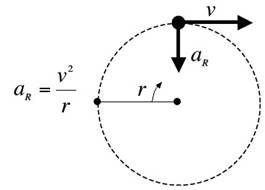
Circular Motion


PhET Application where you can model circular motion
https://phet.colorado.edu/en/simulation/legacy/motion-2d


Derivation of Centripetal Acceleration

Homework:

  • Circular Motion Ex 4H, p.132-134
  • Projectiles Ex 4F, p.119-124 - complete this especially Question 6.


Monday, 15 February 2016

Term 1 Week 3

Projectile Motion

The basic concepts of Projectile Motion below

Good Video below on the basics and how to answer a question


Vectors

Good video below on Vectors below, but note that it has two mistakes:


  1. Displacement is a Vector. Distance is a Scalar
  2. Weight is a force and so it is a Vector. Mass is the amount of matter and is a Scalar

Vectors have a size and direction. Scalars have only a size.

Homework

  • Vectors Ex 4A, p.90-94
  • Kinematics Ex 4E, p.115-117
  • Projectiles Ex 4F, p.119-124


Tuesday, 9 February 2016

Term 1 Week 2

Rearranging Kinematic Equations

You need to get familiar with rearranging the Kinematic Equations for each term

Homework: complete p.30-31 1D Kinematic Equations by Thursday 11th Feb

Projectile Motion

All objects fall at the same rate regardless of their horizontal velocity

  • Vertical Axis - downward acceleration at g, use kinematic equations
  • Horizontal Axis - no acceleration due to forces being balanced, use v =d/t

PhET app on Projectile motion demo

The link to this app is here
https://phet.colorado.edu/en/simulation/projectile-motion

Use Trigonometry to find your Vertical initial velocity and Horizontal initial velocity


Sunday, 7 February 2016

Term 1 Week 1


Fundamental Units and Compound Units

Fundamental Units used in Physics looked at and how they combine to make up all the other units used in Physics.
Fundamental Units covered in detail were:

  • Time - t (seconds - s)
  • Displacement - d (meters - m)
  • Mass - m (kilogram - kg)
  • Electric Current - I (Amp - A) { NB: this multiplied to time makes Charge - Q, q (Coulomb - C) which one would think is the more logical fundamental unit. The reason is due to how we measure Current}
There are three more to do with Temperature, Amount of a Substance and Luminous Intensity which are not dealt with at this level.

Veritassium video on the worlds roundest object and the kilogram 

Kinematic Equations

The Kinematic Equations are required for any moving object that experiences a constant acceleration


Homework: Kinematic Equations Problem Sheet